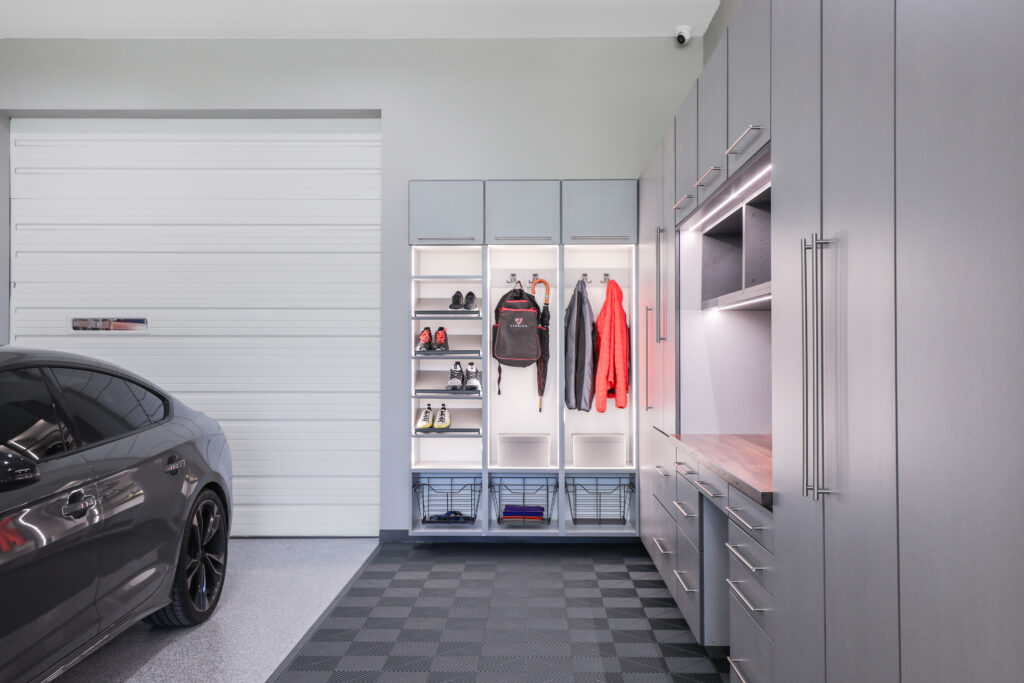
Cabinets look harmless until you load them with paint cans, jack stands, a benchtop planer, and a bucket of bolts. Then the wall tells the truth. Good garage cabinet installation is 10 percent layout and finish, 90 percent understanding what is behind the surface and how to anchor into it. If you get the wall type wrong or undersize the anchors, the cabinet will sag, crack, or rip free, usually at the worst time. If you plan correctly, even a fully loaded bank of overheads will feel like part of the building.
I have installed and inspected hundreds of garage storage systems in homes that range from mid-century block construction to new builds with engineered studs and hurricane straps. The principles are consistent, but the details change street by street. The following is a practical guide, rooted in field experience, on how to match anchoring method to wall type, how to plan for the loads cabinets actually see, and where the edge cases will catch you by surprise. If you are hiring a garage cabinet company or working with garage cabinet builders, you will know which questions to ask. If you are installing Custom garage cabinets yourself, you will know what to look for before you drill.
What cabinets weigh in the real world
An empty 30 inch by 36 inch wall cabinet might weigh 55 to 90 pounds depending on construction and doors. Fill it with a dozen quarts of paint, a stack of brake rotors, and fastener bins, and you are rolling past 200 pounds without trying. A bank of three uppers can put 600 to 800 pounds into the wall. That load wants to pull the top fasteners out (tension) and shear the bottom fasteners off. The cabinet box spreads the load over a back panel and rails, but at the end of the day all the force flows through a handful of screws, bolts, or anchors into framing, block, or concrete.
Two numbers matter most. First, the pullout capacity of the fastener in the material you have. Second, the shear capacity of that same connection. Real life gives you less than the catalog, because pilot holes are not perfect, block webs are not solid, and garage humidity works on steel year after year. Build with margin. When a manufacturer says an anchor has 250 pounds of pullout in 5/8 inch drywall, do not mount a 220 pound cabinet onto drywall alone. That rating assumes perfect installation and perfect gypsum, neither of which you have in a garage that has seen a few summers.
How walls in garages are actually built
Most garages present one or more of these wall types. Sometimes you have a mix on the same wall.
Wood studs with drywall. Common in attached garages and newer construction. Standard 16 inch on center spacing, sometimes 24 inch to save cost. Drywall is usually 1/2 inch, occasionally 5/8 inch if the wall is fire rated between the garage and living space. The studs might be Douglas fir, SPF, or Southern yellow pine. Behind the drywall, electrical lines run horizontally near outlet height and vertically to switches and overhead lights.
Metal studs with drywall. More common in multi-unit buildings and some high wind regions where non-structural partitions use 25 to 20 gauge steel studs. Metal studs have thin flanges and need special screws or reinforcement for cabinet loads.
CMU block walls. Very common for Garage cabinets in Orlando, FL and much of Florida. You see 8 inch concrete block with stucco outside and either bare block or drywall on furring strips inside. The block is hollow with 1 1/4 inch to 1 3/8 inch thick webs, with some cells filled with grout and rebar at regular intervals. Wood furring strips are often attached with cut nails or Tapcon screws, 16 to 24 inches on center, then covered with drywall.
Poured concrete and tilt-up panels. Found in some high-end garages and detached outbuildings. You are dealing with solid concrete in the 3,000 to 5,000 psi range.
Plaster over lath. Older homes. The plaster keying into wood lath makes for an unpredictable substrate, and studs may not be where you expect.
SIPs and ICFs. Less common, but you see foam core panels with OSB skins (SIP) or insulated concrete forms (ICF) in energy-focused builds. You anchor differently to each.
If you do work regularly in Central Florida, add two more wrinkles. First, post-tension slabs are common, and you do not drill into or within a foot of the slab edge without checking for cables. Second, garages see high humidity and occasional wind-driven rain. Corrosion protection on anchors is not optional.
Planning loads and layout before you touch a tool
Start by sketching what the cabinets will hold, not just the pretty layout. That determines how many structural connection points you need and whether a hanging rail or direct-to-stud approach is better.
A hanging rail, sometimes called a French cleat or steel mounting rail, spreads the load across many fasteners and lets you hit every stud or several block cells at the top, where the tension is highest. Direct screwing through the cabinet back into studs works, but only if you can catch solid structure with enough fasteners to meet the load. In long runs, I prefer a continuous steel rail anchored every 8 to 12 inches. In block, I hit every other web if the pattern allows. In wood studs, I use at least two fasteners per stud engagement.
Then look at heights and clearances. Garage floors slope 1 to 2 percent toward the door. That Garage cabinet installation shows up as a 1 inch drop over 4 to 8 feet. Level the uppers to each other, not to the floor, and use shims at bottom cleats. If your base cabinets are off the floor, leave at least 6 inches of toe clearance so you can sweep and keep the fronts out of splash zones. In Florida, termites are real. Keep wood components off concrete where possible or isolate with metal bases or treated sills.
Finally, confirm door swings, opener tracks, and car doors. I have seen beautifully mounted uppers crushed by a minivan sliding door because someone forgot to open the door in the design software.
Finding structure without guesswork
For wood studs, I trust three tools more than most. A magnetic stud finder with a rare-earth magnet will locate screw heads in the drywall, which tells you where the stud runs. A good electronic finder will confirm the center and depth. A thin drill bit, 1/16 inch, verifies the stud and saves you from a missed edge. I work in pairs of holes to find the stud center before running full-size pilots. Mark as you go, not with tape that can move, but with pencil ticks that align to a level line.
In CMU block, your best bet is to land in the solid parts of the web, not the hollow. A tap test tells you a lot. The web sounds higher pitched than the cavity. If drywall covers furring, a borescope through a small hole between cabinets can show strip placement. Where you cannot remove drywall, a stud finder set to deep scan sometimes sees furring strips, but not always. Plan to miss a few, and fill exploratory holes later.
Before drilling, locate utilities. In garages, outlets line the wall at 42 to 48 inches on center. Cables often route horizontally between them. Water lines and softener loops can hide behind short walls. I have found refrigerant lines between garage and house walls more than once. Use a non-contact voltage tester as a sanity check near switches and outlets, and keep pilot holes 6 inches above or below horizontal runs unless you are sure of framing.
If your garage sits on a post-tension slab, look for a stamped warning on the inside of the garage or the plans. The cables run in the slab, but I have seen DIYers chase anchors too low near the sill and clip steel or spall concrete. If you must anchor near the slab, stay at least 3 to 4 inches above the floor line in concrete walls, and never drill into the slab edge.
Anchors that hold and where they work
Into wood studs. Structural wood screws are my default for cabinet rails. A 5/16 inch diameter screw rated for structural connections, 3 to 4 inches long, will give more than enough pullout and shear in sound lumber. Predrill with a bit that matches the core diameter, not the outside thread. If you only have 1/2 inch drywall over studs, length matters. A 3 inch screw gives around 1 1/2 inches of bite into wood beyond the drywall and cabinet back, which is fine. For older, dry studs, wax or lubricant reduces splitting when going close to edges. Traditional lag bolts work too, but they are slower and require socket clearance inside the cabinet.
Into metal studs. Thin 25 gauge studs will not hold heavy cabinets with screws into the flange alone. You need to spread the load. Options include toggler-type anchors that span the stud web, specialty metal stud anchors that crimp inside, or, better, adding wood blocking. If the wall is open or you can remove a drywall strip, install 3/4 inch plywood blocking across several studs at the cabinet height, screwed with framing screws, then patch the drywall. If you cannot open the wall, a steel hanging rail anchored at every stud with heavy duty togglers can work for moderate loads, but I avoid loading beyond 100 pounds per stud without blocking.
Into drywall only. This is for light-duty shelving, not garage cabinets. Even the best toggles concentrate load on gypsum. They can hold a cabinet briefly, but impact from opening and closing doors loosens them. If you inherit a affordable garage cabinets Orlando wall with no structural hits and cannot add blocking, shift to a floor-mounted cabinet or a system that transfers load to the slab.
Into CMU block. Two workhorses cover most cases. Concrete screws, commonly called Tapcons, are fast and clean if sized and installed correctly. For cabinet rails, I use 1/4 inch or 5/16 inch diameter, 2 1/4 to 3 3/4 inch long, with a minimum 1 1/4 inch embedment into solid web or filled cell. Predrill with the specified bit size, which is usually slightly undersize, and blow out dust. Keep at least 1 1/2 inches from block edges to avoid spalling. If the block is soft or the hole reams out, step up to sleeve or wedge anchors. A 3/8 inch sleeve anchor set 1 1/2 to 2 inches into the web gives strong and reliable hold. In Florida, many block cells are grouted at intervals, which gives you solid concrete to bite. If you hit hollow, move over to the web or use a longer sleeve that can expand against the opposite side. For the heaviest runs, I use adhesive anchors. Drill to depth, clean meticulously with brush and air, inject epoxy, and set threaded rod. That yields very high pullout per point, at the cost of time and cure.
Into poured concrete. Wedge anchors, sleeve anchors, and adhesive anchors all work well. The choice depends on edge distance and load. Wedges give high capacity but need more edge clearance. Sleeves put less stress on edges. Adhesive anchors excel when you must get close to an edge or when the concrete is brittle. Use at least 2 inches of embedment for 3/8 inch hardware in typical 4 inch walls. Mark your bit with tape so you do not punch through to the outside on thin walls.
Into plaster on lath. Treat it like drywall over wood studs, but be gentler with drilling. Plaster chips easily. Once you find studs, use structural screws. Avoid toggles that rely on plaster alone.
SIPs and ICFs. For SIPs, you can screw into the OSB skin with long structural screws, but that limits load. Best is to tie into splines or structural members. Many SIP walls include lumber at regular intervals for attachment. For ICFs, you either hit the concrete core with concrete screws or cast-in inserts, or you install specialized ICF anchors that thread into plastic webs within the foam. For heavy cabinets, I use adhesive anchors into the concrete core through predrilled sleeves in the foam.
Fastener spacing, edge distances, and real math
Design load per connection is not a guess. If you have a 200 pound cabinet hung on a rail with four structural screws evenly spaced across two studs, you would think each screw carries 50 pounds. That overlooks lever arms. The top fasteners see most of the pullout in a wall-mounted cabinet because the cabinet wants to rotate forward. The bottom fasteners see more shear than pullout. A simple way to keep margin is to double up at the top. If you normally use two screws per stud per cabinet, put both near the upper rail. When a cabinet has no lower rail, add a ledger at the bottom to catch a few more fasteners and stabilize the box.
Maintain minimum distances from edges of studs or masonry to avoid splitting or blowout. In wood, keep screws at least 3/4 inch from stud edges. In block, keep a diameter and a half from vertical and horizontal joints. In all materials, embed at least the diameter times ten as a rough rule for pullout, up to what the manufacturer recommends.
Torque matters. Over-tightening concrete screws strips threads in the hole. Under-tightening wedge anchors reduces expansion. Use an impact driver with a clutch setting or a torque wrench for consistent results on wedges and sleeves. When in doubt, run a test in a sacrificial hole to feel the stretch before you commit on the real line.
Steel hanging rails, French cleats, and ledger boards
Hanging rails shine when walls are uneven or when you need to spread load. A typical steel rail is 1 1/2 inches tall, mounts level across the full run, and accepts cabinet brackets that hook over and lock. This lets you anchor every stud or block web you can, then hang cabinets and adjust. The rail acts as a continuous top cleat, which handles the pullout forces better than individual cabinet backs. French cleats in wood work similarly, but in humid garages a powder-coated steel rail resists seasonal movement and corrosion.
Ledger boards at the bottom are old carpentry, and still useful. A 1x4 or 2x2 temporarily screwed level to the wall gives a shoulder to rest cabinets on while you anchor the top. Sometimes I leave the ledger in place and finish it to match. It doubles as a bumper and bottom stabilizer. If the wall bows, you can shim behind the ledger to bring the fronts into a straight line.
A humidity and corrosion reality check
Garages in coastal or humid regions eat hardware. In Orlando I have seen standard zinc-plated screws show white rust in a year on an exterior-facing block wall that wicks moisture. Inside a conditioned garage, you still have temperature swings that condense moisture on cool metal. Hot-dip galvanized, polymer-coated structural screws, or 304 stainless in less aggressive environments are minimums. If your cabinets sit near a pool pump, acid storage, or a generator that off-gasses, step up to 316 stainless on exposed hardware. For pressure-treated blocking, make sure your fasteners are ACQ compatible. Traditional electroplated hardware will pit when it touches ACQ lumber.
Seal penetrations in exterior walls. A small bead of polyurethane or silicone around a fastener in block reduces moisture trickle and protects the anchor from corrosion. If you use adhesive anchors, cap the stub of threaded rod with a nut and washer and a little sealant to keep water out of the threads.
A five-step field-proven install sequence
- Confirm wall type and mark structure. Use a magnet, deep scan, and pilot holes to map studs, webs, or blocking. Mark a level baseline for the rail or top of the cabinets, taking floor slope into account. Choose anchors and predrill accurately. Size fasteners for the load and material. Drill clean holes, brush and blow out dust for concrete or block, and test one hole before committing to the full run. Set a continuous top rail or ledger. Level it, shim as needed, and anchor every 8 to 12 inches into structure. If you are installing direct through cabinet backs, predrill the cabinets and add temporary ledgers to hold them while you fasten the top. Hang, plumb, and connect. Lift cabinets onto the rail or ledger, clamp face frames or sides, and join boxes with through-bolts or confirmat screws where the manufacturer specifies. Check for twist and shim behind backs to remove gaps before final tightening. Final fasteners, load test, and seal. Add bottom screws if designed, torque anchors to spec, then load a controlled weight equal to a fraction of expected contents to watch for deflection. Seal exterior penetrations and touch up holes.
This sequence works with most systems and keeps you disciplined about structure first, cosmetics second.
Quick anchor selection cheat sheet for garages
- Wood studs behind drywall: 5/16 inch structural screws, 3 to 4 inches long, two per stud at the top rail, ledger or lower screws for stability. Metal studs: add blocking if possible; otherwise, heavy-duty toggle anchors into every stud with a steel hanging rail and conservative loads. CMU block: 1/4 to 5/16 inch concrete screws with 1 1/4 inch embedment into webs or grouted cells; step up to 3/8 inch sleeve anchors or adhesive anchors for heavy runs. Poured concrete: 3/8 inch wedge or sleeve anchors with 2 inches embedment, or adhesive anchors near edges. Plaster over lath: find wood studs and use structural screws; avoid relying on plaster or lath for any structural load.
If a wall has layered construction, such as drywall on furring over block, treat it as block and aim to land anchors in the masonry, not just the furring.
Orlando specifics: block walls, storms, and salt air
A typical Orlando garage has at least one CMU wall, often several. Interior walls to the house are wood stud with 5/8 inch Type X drywall. Exterior walls are block, sometimes painted inside, sometimes furred and drywalled. The stucco and paint outside hide moisture movement, but the block still breathes. During summer, moist air condenses inside the cooler garage on block surfaces. Anchors in those walls must handle subtle but constant moisture. I use polymer-coated concrete screws or stainless sleeve anchors for rails. If the budget allows, adhesive anchors with stainless all-thread give a belt-and-suspenders solution for heavy sections like a full-height pantry cabinet loaded with car parts.
Wind uplift is not your main concern for cabinets inside a closed garage, but doors can fail and pressure can spike. Systems that mechanically lock cabinets to a wall rail reduce the chance of vibration walk-off. If you live near the coast or on a lake, salt works into hardware even when the door stays shut most days. I have removed garage runs after five years that looked fine outside but had flaking zinc on the screw shanks. Spend the few extra dollars on better coatings.
One Orlando case stands out. A block wall with glued-on drywall had no furring. The homeowner wanted a floating run of uppers over a workbench. We pulled a 4 inch by 48 inch strip of drywall where the rail would go, patched the bottom edge clean, and mounted a powder-coated steel rail directly to the block with 5/16 inch concrete screws at 8 inch centers. We hit two grouted cells by luck, and the rest landed in webs. The patch went back in below the rail, mudded clean, and the cabinets hung with bracket locks. That run has held a planer and boxes of tile ever since. Anchoring through fresh drywall into furring would have been faster, but the risk of strip-out was too high.
Common mistakes I see and how to dodge them
Skipping layout and hitting only one stud over a long run. It works until it does not. Map the structure, use rails, and plan fastener spacing.
Relying on drywall anchors for heavy cabinets. Drywall is not structure. Even if a toggle says 238 pounds, that is in perfect conditions and does not include dynamic loads from doors slamming.
Drilling too close to block edges. The web will spall. Give yourself space and pick a different point on the pattern if you need to.
Using interior-rated screws in a humid garage. They will rust. Upgrade to coated or stainless.
Ignoring utilities. A screw through a 12 gauge cable turns a tidy project into an electrician’s visit. Learn the common routing height for your region, and confirm with a non-contact tester.
Assuming all studs are 16 inches on center. I have measured 13 3/4 inches, 19 inches, and creative jack-stud placements in remodels. Trust your map, not the textbook.
Working with a pro and what to expect
A reputable garage cabinet company spends more time with a level and a drill bit than with a tape measure. They will verify wall type, identify hidden risks, and propose anchoring that matches both your cabinets and your walls. If you meet garage cabinet builders who gloss over wall composition or who promise to hang everything with a handful of toggles, keep shopping. The good ones talk about rails, concrete embedment, corrosion resistance, and load paths. They will also tell you what they do not know until they open the wall or pull a test fastener.
If you are ordering Custom garage cabinets, involve the installer early. Cabinet back construction influences anchor choices. A full 3/4 inch plywood back spreads load better than thin hardboard. If you prefer a clean interior with no visible bolts, plan for rails that hide behind a top valence. If you want floating cabinets with zero legs, confirm with the builder that the wall will handle the shear over time and that you are not over a section of drywall glued to foam.
Maintenance and rechecks
Cabinets are not install and forget. Every two to three years, or after any significant seismic or wind event, inspect anchor points. Look for rust blooms around fastener heads, hairline cracks in stucco or drywall near anchors, cabinet doors that no longer align, and soft spots at the bottom of uprights that sit near the floor. If you used concrete screws, put a wrench on one at the end of a run and feel for movement. It should not budge. If it does, remove, redrill to the next size, and replace with a sleeve or adhesive anchor.
When you change what the cabinet carries, reassess. If that light upper suddenly inherits a 70 pound miter saw you rarely use, fine. If it becomes the permanent home of a turret press and lead shot, time to upgrade the anchoring or move the load to a base cabinet.
Edge cases and judgment calls
Sometimes there is no good place to anchor. An exterior shear wall covered in foam board and siding is one. A fire-rated separation where penetrations must be sealed and documented is another. In those cases, switch tactics. Floor-mounted cabinets with anti-tip brackets screwed into the sill plate can give you the storage you need without violating codes or risking failure. Free-standing systems with back rails can also tie to ceiling joists if accessible, but know that garage ceilings often use bottom-chord trusses not intended for point loads. If you must hang from above, spread load with Unistrut across multiple truss chords and confirm with an engineer when loads exceed light duty.
The payoff for getting it right
Well-mounted cabinets feel like built-ins. Doors line up year after year. Shelves do not sag. You can grab a handle to steady yourself without the box flexing. When you sell the house, a smart buyer or inspector will notice that the installer used a rail, good anchors, and sealed penetrations. If you live where block rules the landscape and the weather punishes shortcuts, the difference between generic and thoughtful anchoring is years of reliable use.
Whether you hire a garage cabinet company or tackle a garage cabinet installation yourself, the wall decides the method. Respect the material, choose anchors that fit the load and the environment, and give yourself margin. The time you spend mapping studs and webs, cleaning holes, and torquing hardware to spec pays back every time you load another heavy box and the cabinet does not flinch.